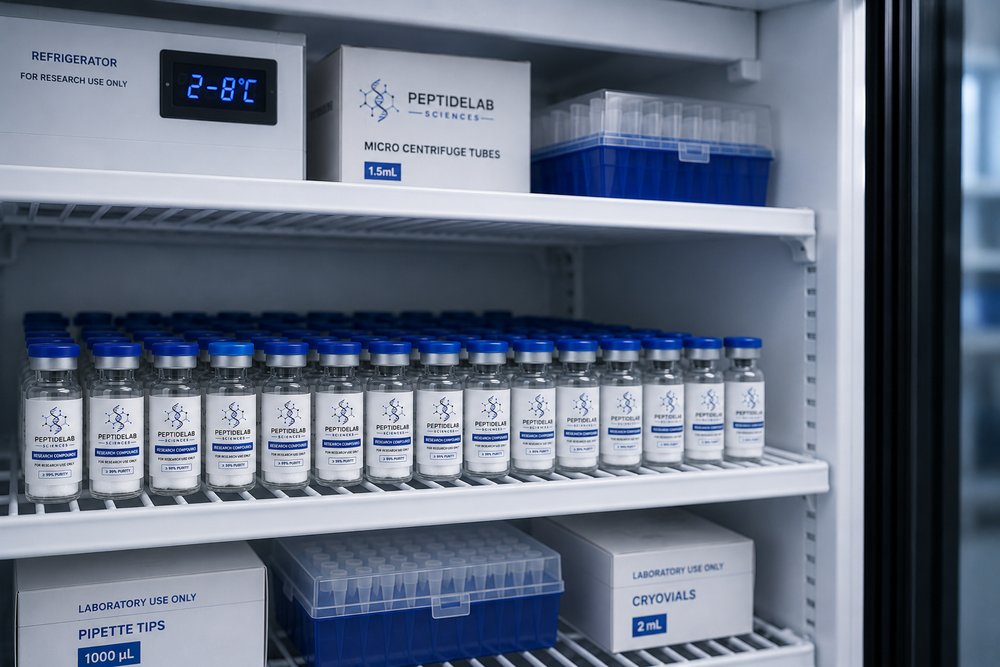

Proper storage is an important aspect of maintaining the quality and integrity of research materials. Environmental conditions such as temperature, moisture, and light exposure can affect the stability of laboratory compounds over time.
Following appropriate storage procedures helps support consistency and reliability in research environments.
Key Storage Considerations
Researchers should review all product documentation and handling guidelines before storing any material.
Common storage considerations include:
- Maintaining recommended temperatures
- Limiting exposure to direct sunlight
- Protecting materials from moisture
- Using clean laboratory handling procedures
- Keeping products in properly sealed containers
Why Storage Matters
Maintaining appropriate storage conditions helps preserve material quality and supports long-term stability. Proper handling and storage procedures are important components of laboratory quality control.
Researchers should always follow manufacturer recommendations and established laboratory practices when handling research compounds.
Best Practices
To help support product integrity:
- Store materials according to recommended guidelines
- Keep products in their original containers whenever possible
- Avoid unnecessary exposure to heat and humidity
- Maintain organized inventory and batch records
- Review product documentation regularly
Conclusion
Careful storage and handling practices help protect the integrity of research materials and contribute to consistent laboratory outcomes. Proper environmental controls remain an important part of quality-focused scientific research.
Research Use Only Disclaimer
The information provided in this article is for educational and informational purposes only. Products offered by Peptide Lab Sciences are intended exclusively for laboratory research purposes and are not for human consumption, medical use, therapeutic use, veterinary use, or diagnostic applications.