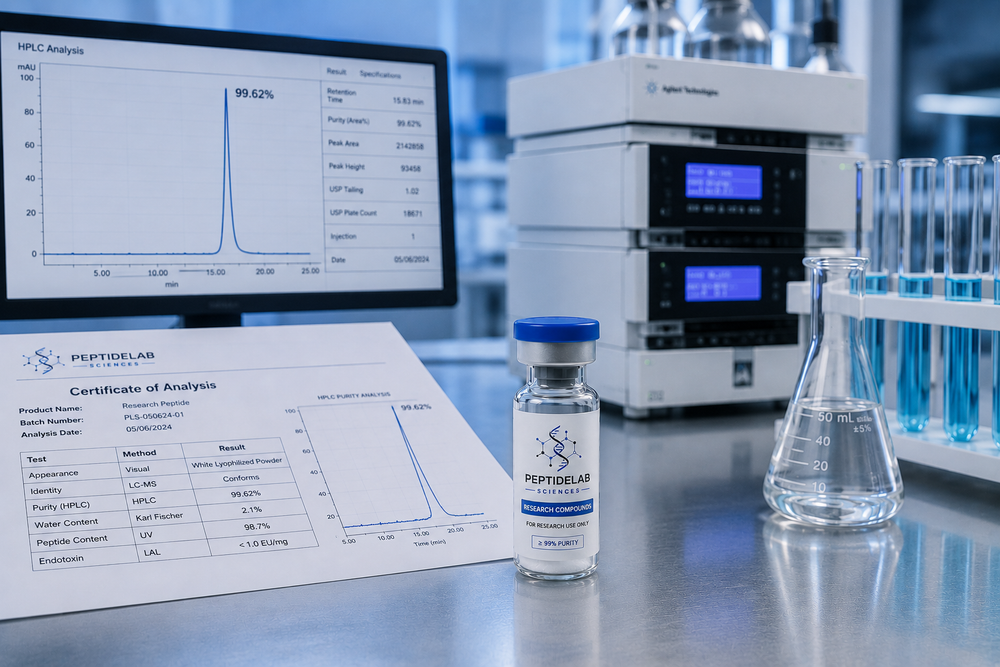

Quality assurance is a critical component of scientific research. Independent third-party testing provides researchers with valuable information regarding the identity, purity, and consistency of research materials.
One of the most important quality documents available to researchers is a Certificate of Analysis, commonly referred to as a COA.
What Is a COA?
A Certificate of Analysis is a laboratory document that summarizes analytical testing performed on a specific batch of material.
A typical COA may include:
- Product name
- Batch number
- Purity results
- Testing methods
- Date of analysis
- Laboratory verification information
Each batch is analyzed individually, allowing researchers to review quality data specific to the material they receive.
Why Third-Party Testing Matters
Independent testing provides an additional level of transparency and quality verification. Rather than relying solely on internal analysis, third-party laboratories perform objective testing using established analytical methods.
Benefits include:
- Increased transparency
- Improved batch consistency
- Greater confidence in research materials
- Enhanced quality assurance
Supporting Research Integrity
Access to verified analytical data allows researchers to make informed decisions regarding the materials used in their studies. Quality documentation plays an important role in maintaining scientific standards and promoting reproducible research.
Conclusion
Third-party testing and Certificates of Analysis help support transparency, consistency, and confidence in laboratory research. Reviewing batch-specific testing data is an important step in maintaining quality-focused research practices.
Research Use Only Disclaimer
The information provided in this article is for educational and informational purposes only. Products offered by Peptide Lab Sciences are intended exclusively for laboratory research purposes and are not for human consumption, medical use, therapeutic use, veterinary use, or diagnostic applications.